Abstract. Robots are often shipped insecure and in some cases fully unprotected. The rationale behind is threefold: first, defensive security mechanisms for robots are still on their early stages, not covering the complete threat landscape. Second, the inherent complexity of robotic systems makes its protection costly, both technically and economically. Third, vendors do not generally take responsibility in a timely manner, extending the zero-days exposure window (time until mitigation of a zero-day) to several years on average. Worse, several manufacturers keep forwarding the problem to the end-users of these machines or discarding it. In this article we review the status of robot cybersecurity considering three sources of data: 1) recent literature, 2) questionnaires performed in top robotics forums and 3) recent research results in robot cybersecurity. Building upon a decade of experiences in robotics, this article reviews the current status of cybersecurity in robotics and argues about the current challenges to secure robotic systems. Ultimately, based on the empirical results collected over a period of three years performing security assessments in robots, the present text advocates for a complementary offensive approach methodology to protect robots in a feasible and timely manner.
Full text transcribed from the original publication source.
1Notes for Practice
- This article reviews the status of robot cybersecurity considering research and empirical data.
- While systematically reviewing sources, the article provides various observations that attempt answering two questions posed initial: what’s the status of cybersecurity in robotics? and, how can we best improve cyber-resillience in robotics?
- Following a red teaming methodology, the article considers the vulnerabilities affecting robots from three different robot manufacturers and provides an intuition on how to use these flaws to generate indicators to evaluate the security readiness of a manufacturer.
- Based on the theoretical and empirical results studied, the text concludes that robot cybersecurity is still on its early stages and neither practitioners nor manufacturers or defensive security solutions meet the current industry demands to remain secure. Given this scenario the text provides a final observation considering red teaming methodologies to approach robot cybersecurity in a time-sensitive manner.
Keywords: robotics, security, review, survey, offensive
21. Introduction
For the last fifty years, we have been witnessing the dawn of the robotics industry, but robots are not being created with security as a concern, often an indicator of a technology that still needs to mature. Security in robotics is often mistaken with safety. From industrial to consumer robots, going through professional ones, most of these machines are not resilient to security attacks. Manufacturers’ concerns, as well as existing standards, focus mainly on safety. Security is not being considered as a primary relevant matter.
The integration between these two areas from a risk assessment perspective was first studied by Stoneburner (2006)
Security is not a product, but a process that needs to be continuously assessed in a periodic manner, as systems evolve and new cyber-threats are discovered. This becomes specially relevant with the increasing complexity of such systems as indicated by Bozic and Wotawa (2017)
The present article tackles these questions by performing a systematic review. The approach followed is three-fold: first, we review literature in the robot cybersecurity space depicting the current landscape. Second, we study and review the results obtained while surveying different robotics groups and communities in search for an answer of the current state of robot cybersecurity. Third and lastly, we review the results obtained during three years of proactive security research in robotics, discussing vulnerabilities and the offensive exercises conducted. The article finalizes by sharing some thoughts and conclusions about how to secure robots, how to understand better the attack vectors they are subject to and how to minimize their attack surfaces.
2.1Robotic systems and robots
Both literature and practice are often vague when using the terms robot/s and/or robotic system/s. Sometimes these terms are used to refer to one of the robot components (e.g. the robot is the robot arm mechanics while its human-machine interface (HMI) is the teach pendant). Some other times these terms are used to refer to the complete robot, including all its components, regardless of whether they are distributed or assembled into the same hull. Throughout this article the latter is adopted and unless stated otherwise, the terms robot/s and/or robotic system/s will be used interchangeably to refer to the complete robotic system, including all its components.
The remainder of the article is organized as follows: Section 2 provides a literature review of the robot cybersecurity field highlighting some of the current biographical cornerstones. Section 3 elaborates on the results of the questionares and surveys performed in top robotics conferences and forums. Section 4 reviews the vulnerability landscape in robotics using empirical data collected while assessing the security of multiple robots over the past three years. Finally, Section 5 presents some conclusions and thoughts on how to better secure robotic systems.
32. A literature review of cybersecurity in robotics
Arguably, the first installation of a cyber-physical system in a manufacturing plant was back in 1962 (Robinson, 2014)
Security however hasn’t started being addressed in robotics until recently. Following after McClean et al. (2013)
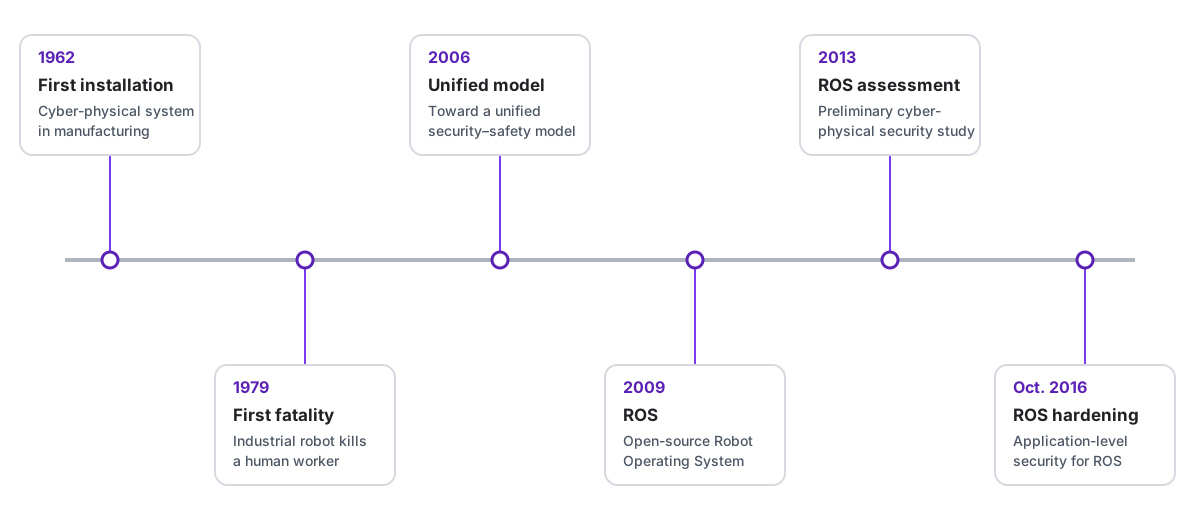
A bit more than a year after that, starting in 2018, it’s possible to observe how more groups start showing interest for the field and contribute. Mayoral-Vilches, Kirschgens, Calvo, et al. (2018)
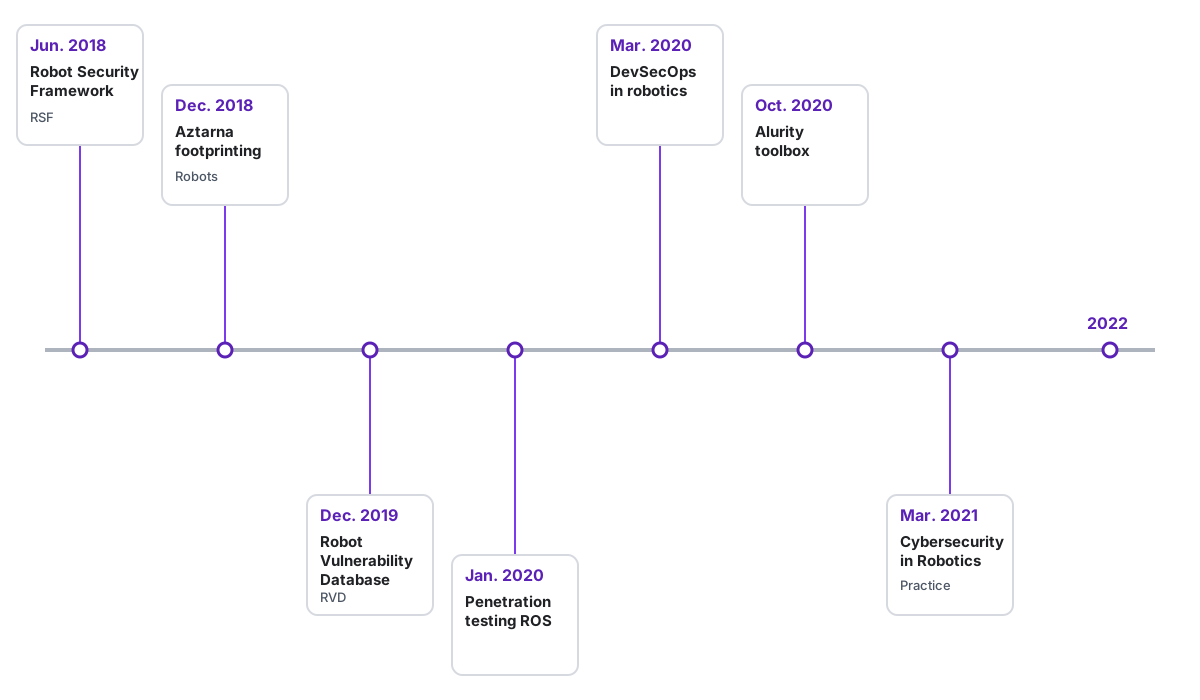
43. Surveying the robotics community
During a period of two years (2019–2020) various security surveys were conductued in top robotics conferences and forums. The following subsections discuss each one of them while attempting to draw some observations.
4.13.1 Surveying the ROS community
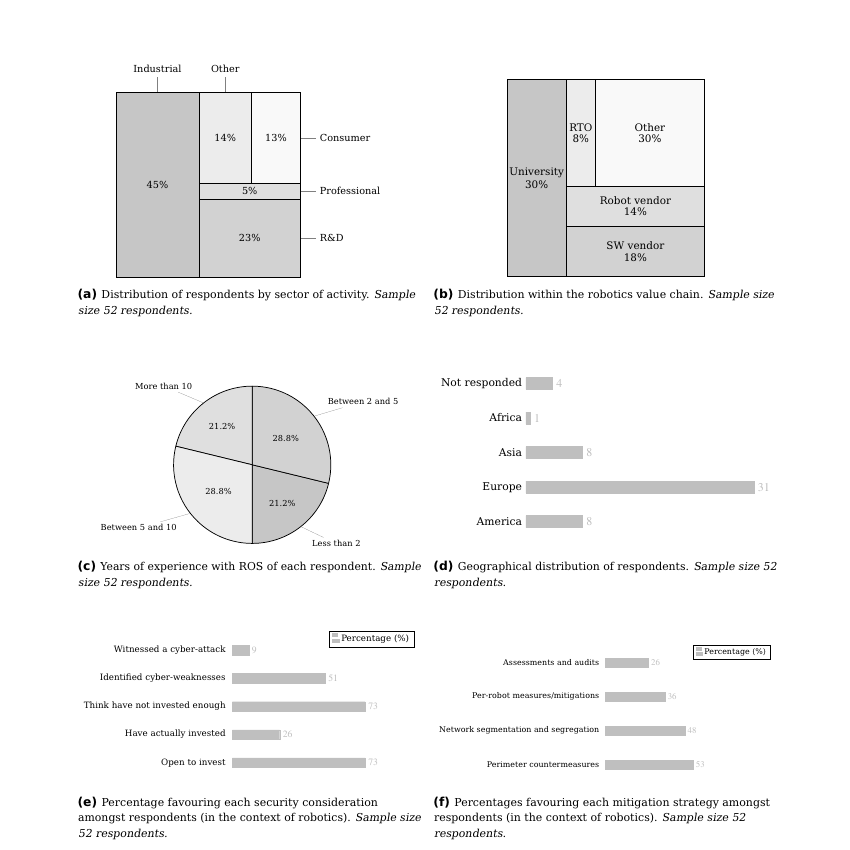
Figure 1 presents a summarized result of the survey conducted in the ROS community during a period of several months. The survey received a total of 52 responses, which represented the small interest in security at the time. The largest groups of participants are depicted in Figure 1b. The most represented group comes from Universities (30%), followed by Software vendors (18%) and Robot manufacturers (14%). The majority of the respondents have at last 2 years of experience with ROS and half of them at least 5 (1c), most coming from Europe (1d). Figure 1e present data on security considerations. The data indicates that 73% of the participants think that they have not invested enough to protect their robots from cyber-threats. Coincidentally, the same number of participants indicated that their organizations are open to invest however only 26% acknowledge to actually have invested. This data leads to the following observation.
Others comprises various subgroup, all with less representation than the ones mentioned.
When considering the mitigation strategies applied by respondents as depicted in Figure 1f, it’s important to highlight that most efforts concentrate on perimeter actions (i.e. firewalls, segmentation and segregation) whereas robot-specific defensive solutions are only applied in a 36% of the cases. Similarly, network assessments and security audits are conducted only in one fourth of the cases (26%) which conflicts with the de facto security practices in other industries, wherein assessments are critical to evaluate the resilience of technology.
4.23.2 Surveying the PX4 community
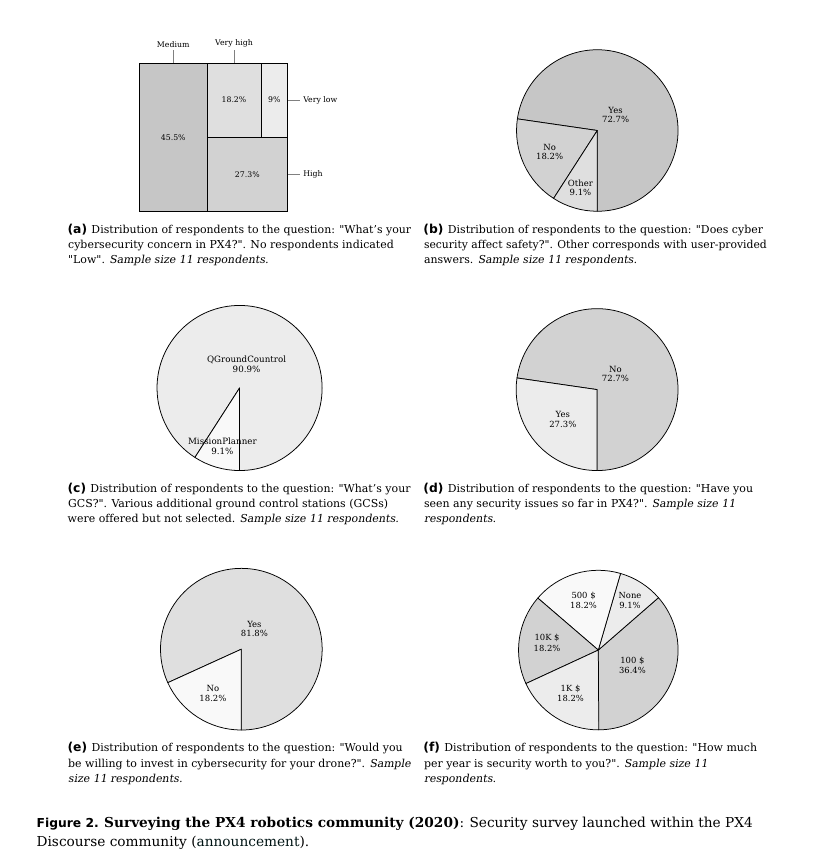
PX4 (Meier et al., 2015)
The majority of the respondents (81%, Figure 2e) indicated to be willing to invest and more than 90% confirmed that the amount could be 100 USD or above (Figure 2f). This aligns nicely with Observation 2 and further hints that growth should be expected in this field.
4.33.3 Surveying the ROS-Industrial community
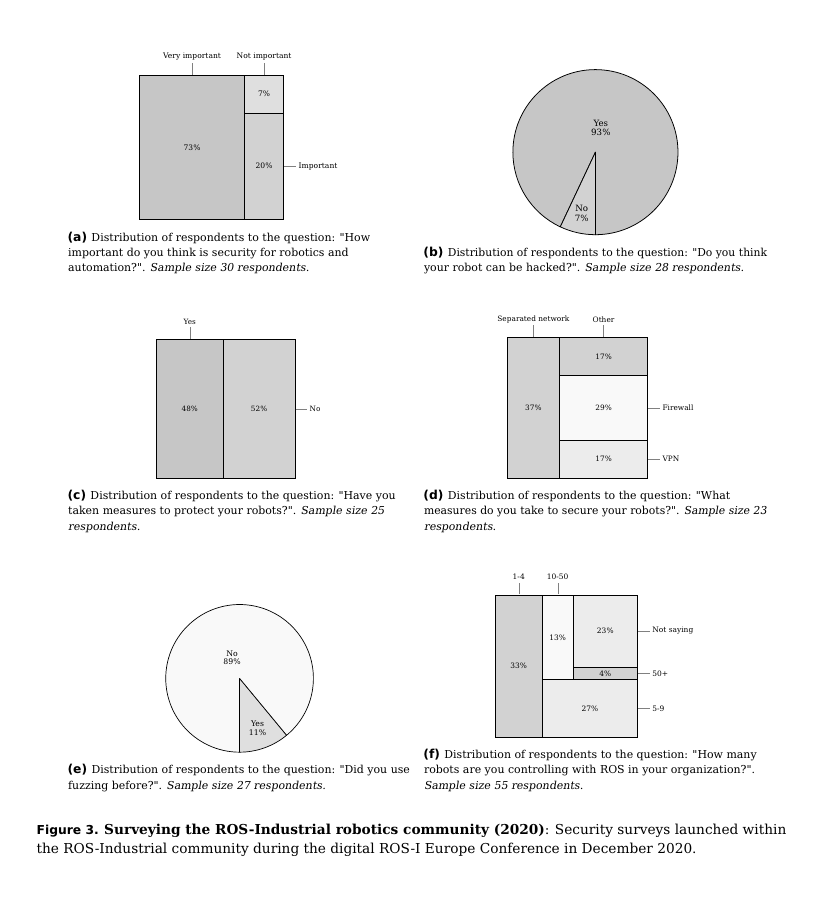
Also in 2020, a series of security-related surveys were launched as part of the European ROS-Industrial Conference, which happens every year in December. Data collected is presented in Figure 3. The majority of the respondents (93%) showed awareness about the threats their robots faced and admitted being aware of their exposure to attackers (Figure 3b). Unsurprisingly, as a subset of the overall ROS community, the security mitigation actions in the ROS-I community also concentrate on the perimeter which lead to another observation.
This fact becomes concerning in industrial environments wherein insider threats are as dangerous, and the disruption of ROS could lead to catastrophic consequences for the automation processes (Mayoral-Vilches, Pinzger, et al., 2020)
4.43.4 Surveying the European robotics community at the European Robotics Forum (ERF) (2020)
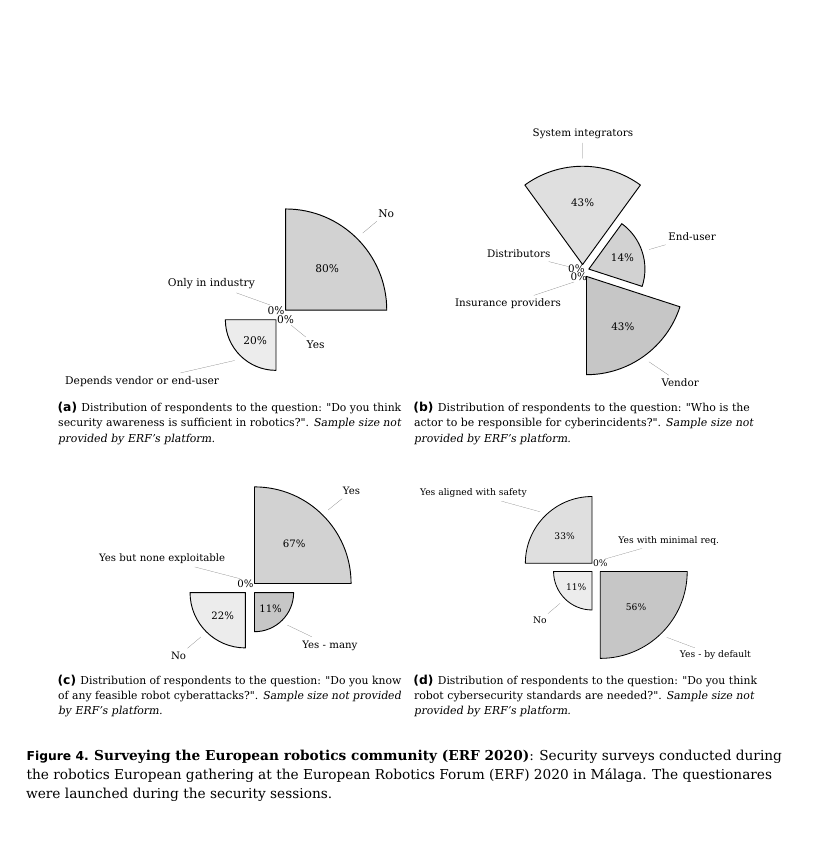
As one of the leading geographies in robotics and cybersecurity, the opinion of european robotics experts was sampled during the annual European Robotics Forum (ERF). Figure 4 summarizes the most relevant data collected. The most interesting observation relates to the question “Who is the actor to be responsible for cyber-incidents?”
54. Security research results in robotics
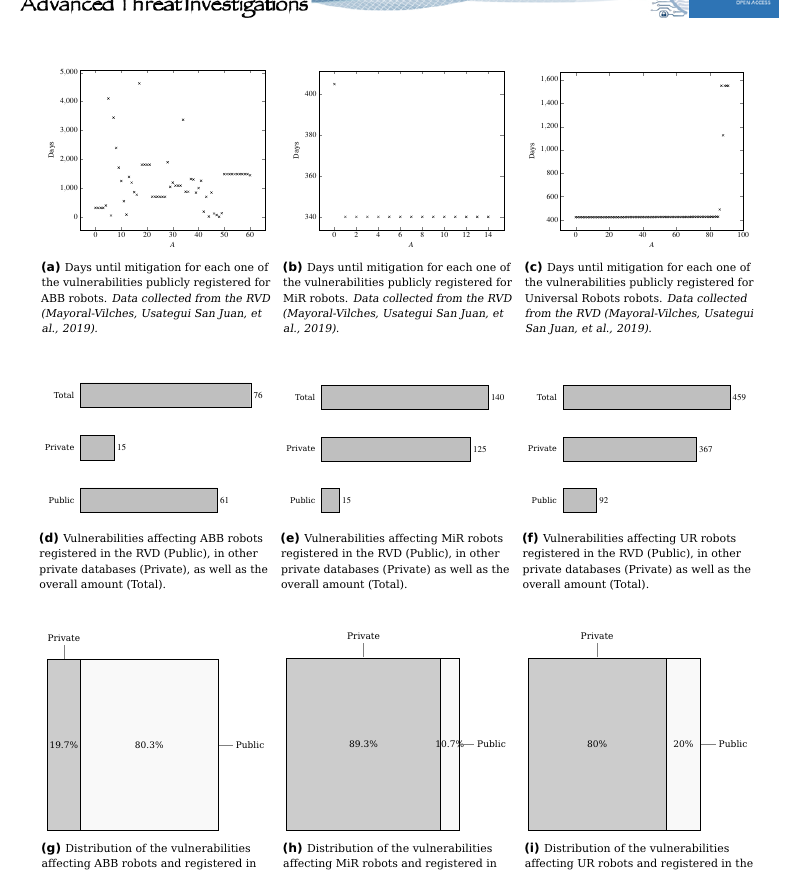
Figure 5 depicts summarized vulnerability research results for three vendors: ABB, Mobile Industrial Robots (MiR) and Universal Robots (UR). The data was collected and archived over a multi-year period. Figures 5a, 5b and 5c illustrate the “days until mitigation” for each vulnerability and according to the public data in the Robot Vulnerability Database (RVD) (Mayoral-Vilches, Usategui San Juan, et al., 2019)
On top of these, Figures 5d to 5i enhance previous data with additional private sources of information and consider vulnerabilities that have yet to reach the public domain. It should be noted that the distribution of vulnerabilities signals the security awareness of the manufacturer. Coherently, Figure 5g shows how for ABB robots, four out of five vulnerabilities considered have been publicly disclosed, triaged and scored. In contrast, for MiR and UR robots the oppositive is observed. Four out of five vulnerabilities have yet to be disclosed publicly.
65. Conclusions
This article reviews the current status of cybersecurity in robotics and argues about the current challenges to secure robotic systems. Three sources of data were considered and treated in three different sections: Section 2 considered recent literature, Section 3 discussed the results of four questionnaires conducted in top robotics forums over a period of two years and finally, Section 4 summarized the security research results in robotics obtained while conducting security assessments.
Various observations were made while evaluating different sources of data which hint that the field is still immature (Observations 1, 2, 3) and the practitioners are mostly yet to observe cyber-attacks (Observation 4). An interesting take is that most mitigations in industry seem to be focused in the perimeter (Observation 5) as this is typically the most feasible approach, however past work (Mayoral-Vilches, García-Maestro, et al., 2020)
The lack of investment and concern that some manufacturers are showing for cybersecurity was confirmed reviewing the publicly available data on robot vulnerabilities. While some manufacturers are increasingly showing progress shortening reaction times (Observation 8), others remain uncaring and persuade their users with marketing messages and strategies centered around openness and community. This appears to be a common trend (Observation 7) in the collaborative robots manufactured by the danish MiR and UR, both owned by Teradyne. In light of this, additional data coming from private (non-publicly available) sources was used to evaluate the threat landscape. Based on the data, Observation 9 concludes that the cooperation with security researchers and the posterior responsible disclosure leads to a reduced threat landscape (and coherently a smaller percentage of non-disclosed vulnerabilities).
The empirical results collected over a period of three years (2018–2020) performing security assessments in robots across industries indicates that most robots currently are vulnerable. The complexity of such systems is indeed one of the causes why defensive approaches are struggling to keep up with the need. Given the current maturity landscape of specialized defensive mechanisms for robots and inspired by the popular adage “the best defense is a good offense”, the present work recommends considering offensive practices to increase the resilience of current robotic systems. Offensive assessments can provide an external evaluation of the security readiness of a particular robot and should be integrated early within the development cycle (Mayoral-Vilches, García-Maestro, et al., 2020)
7Appendix
7.1A. Robotics software quality, safety and security
Quality (Quality Assurance or QA for short) and Security are often misunderstood when it comes to software. Ivers argues (Ivers, 2017)
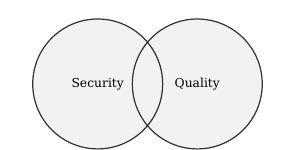
Coming from the same group, Vamosi (Vamosi, 2017)
While the target of this research proposal is Security, Quality will also be studied given its intersection. Often, both secure and quality code share several requirements and mechanisms to assess them. This includes testing approaches such as static code testing, dynamic testing, fuzz testing or software component analysis (SCA) among others.
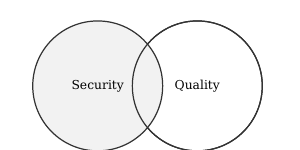
In robotics there is a clear separation between Security and Quality that is best understood with scenarios involving robotic software components. For example, if one was building an industrial Autonomous Guided Vehicle (AGV) or a self-driving car, often, she/he would need to comply with coding standards (e.g. MISRA (Ward, 2006)

Quality in robotics, still on its early stages (Pichler, Dieber, & Pinzger, 2019)
In the opinion of the author of this thesis proposal, coding standards such as MISRA or ISO/IEC TS 17961:2013 for safety-critical and security-critical software components do not guarantee that the final robotic system will be secure and thereby, safe. As illustrated in the example above, robotics involves a relevant degree of system integration and inter-connectivity (non-isolated embedded systems connected together internally and potentially, externally as well). As such, both secure and ultimately safe robotics systems do not only need to ensure quality by complying against coding standards but also guarantee that they aren’t exploitable by malicious attackers.
In the traditional view of system security, safety is often understood as “nothing bad happens naturally” while security intuitively indicates that “nothing bad happens intentionally”. Acknowledging the acceptance of this view in the security community, this thesis will put special focus in the context of robotics and use a different definitions. To further understand terminology and prior art in a robotics context, Table 1 presents a summary of the concepts discussed with their interpretation applied to robotics and the corresponding sources used.
| Concept | Interpretation | Reference/s |
|---|---|---|
| Safety | Safety cares about the possible damage a robot may cause in its environment. Commonly used taxonomies define it as the union of integrity and the absence of hazards (Safety = Integrity + Absence of catastrophic consequences). | Alzola-Kirschgens et al. (2018); Bagnara (2017); Goertzel and Feldman (2009) |
| Security | Security aims at ensuring that the environment does not disturb the robot operation, also understood as that the robot will not put its data, actuators or computing systems at risk of unauthorized access. This is often summarized as Security = Confidentiality + Integrity + Availability. | Alzola-Kirschgens et al. (2018); Bagnara (2017); Goertzel and Feldman (2009); Ivers (2017) |
| Quality | Quality means that the robot’s software will execute according to its design and purpose. | Ivers (2017) |
| Integrity | Integrity can be described as the absence of improper (i.e., out-of-spec) system (or data) alterations under normal and exceptional conditions. | Bagnara (2017) |
Security, as understood in Table 1 shares Integrity with Safety. As discussed in Bagnara (2017) and Goertzel and Feldman (2009)
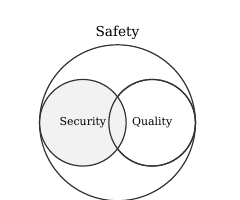
Robot security vulnerabilities are potential attack points in robotic systems that can lead not only to considerable losses of data but also to safety incidents involving humans. Some claim (Zheng, Zhang, Sun, & Liu, 2011)